
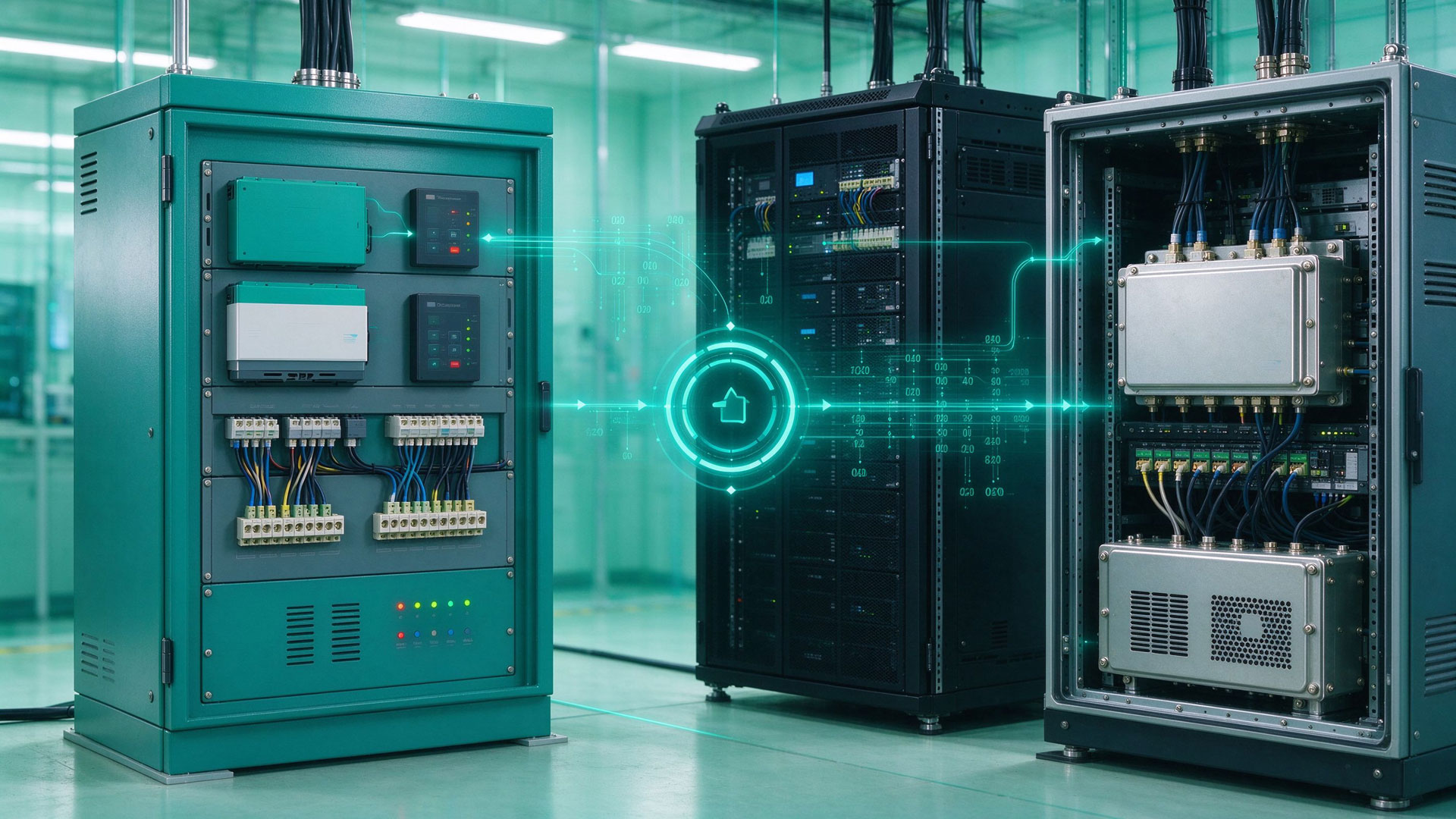
Digital DC/DC Power Modules Open a New Stage of Intelligent Power Management
Digital DC/DC modules integrate built-in digital control and communication interfaces to enable output voltage adjustment, fault diagnosis, status monitoring and remote management. Compared with traditional analog power supplies, they respond faster and support more flexible configuration, making them easier to connect to industrial networks and smart systems. These modules emphasize digital loops, protection logic, communication protocols and anti-interference design, suiting communication base stations, data centers, industrial control and renewable energy systems. Digital power supplies are evolving from single-point power components into manageable, traceable and remotely schedulable intelligent power nodes.
As industrial systems become smarter and more networked, power modules are no longer passive voltage converters. They are evolving into monitorable, configurable and manageable intelligent power nodes. Digital DC/DC modules integrate control, monitoring, protection and communication functions into a single unit, allowing device makers and system integrators to track operating status in real time and dynamically adjust output parameters according to load changes. This transformation is changing the role of power supplies, from hidden components into important nodes in power management networks.
One core advantage of digital power is control flexibility. In analog power supplies, output characteristics are largely determined by peripheral component parameters and adjustments are slow. Digital power uses control loops and firmware algorithms to regulate output, enabling fast load response, dynamic voltage scaling, sequencing and multi-module coordination. In communication equipment, data center servers and industrial control units with frequently changing loads, digital power improves dynamic response, reduces overshoot and undershoot, and raises power quality.
Fault diagnosis and protection are also more precise. Digital modules can monitor input voltage, output voltage, current, temperature and operating status in real time. When an abnormality occurs, they can not only trigger protection actions but also record fault information to help locate the source. This is especially valuable for communication base stations and outdoor sites where maintenance is costly and equipment is widely distributed. Operators can determine whether a shutdown was caused by input anomaly, overload, short circuit or overheat without visiting the site.
Communication interfaces are a key differentiator. Through standard digital interfaces, modules can connect to host systems, industrial buses or remote monitoring platforms, enabling telemetry, remote adjustment and remote control. Administrators can read output status, modify protection thresholds, activate energy-saving modes and manage multiple devices uniformly. In data centers and communication rooms, this capability improves the operational efficiency of power cabinets, server racks and distributed power systems.
However, adopting digital power is not simply replacing one module with another. System designers must consider protocol compatibility, host interface definitions, software drivers, fault handling and electromagnetic compatibility. While the digital part adds intelligence, it can also be more sensitive to interference, requiring proper isolation, grounding, filtering and PCB partitioning. The management benefits of digital power can be fully realized only when both hardware links and software protocols remain stable.
Going forward, digital DC/DC modules will develop toward higher integration, stronger communication and predictive maintenance. Power data will further integrate with device management systems, cloud platforms and industrial IoT, forming schedulable, optimizable and predictable intelligent power networks. Digital power will no longer be limited to “supplying power,” but will become a basic data node in industrial intelligence and energy management systems.