
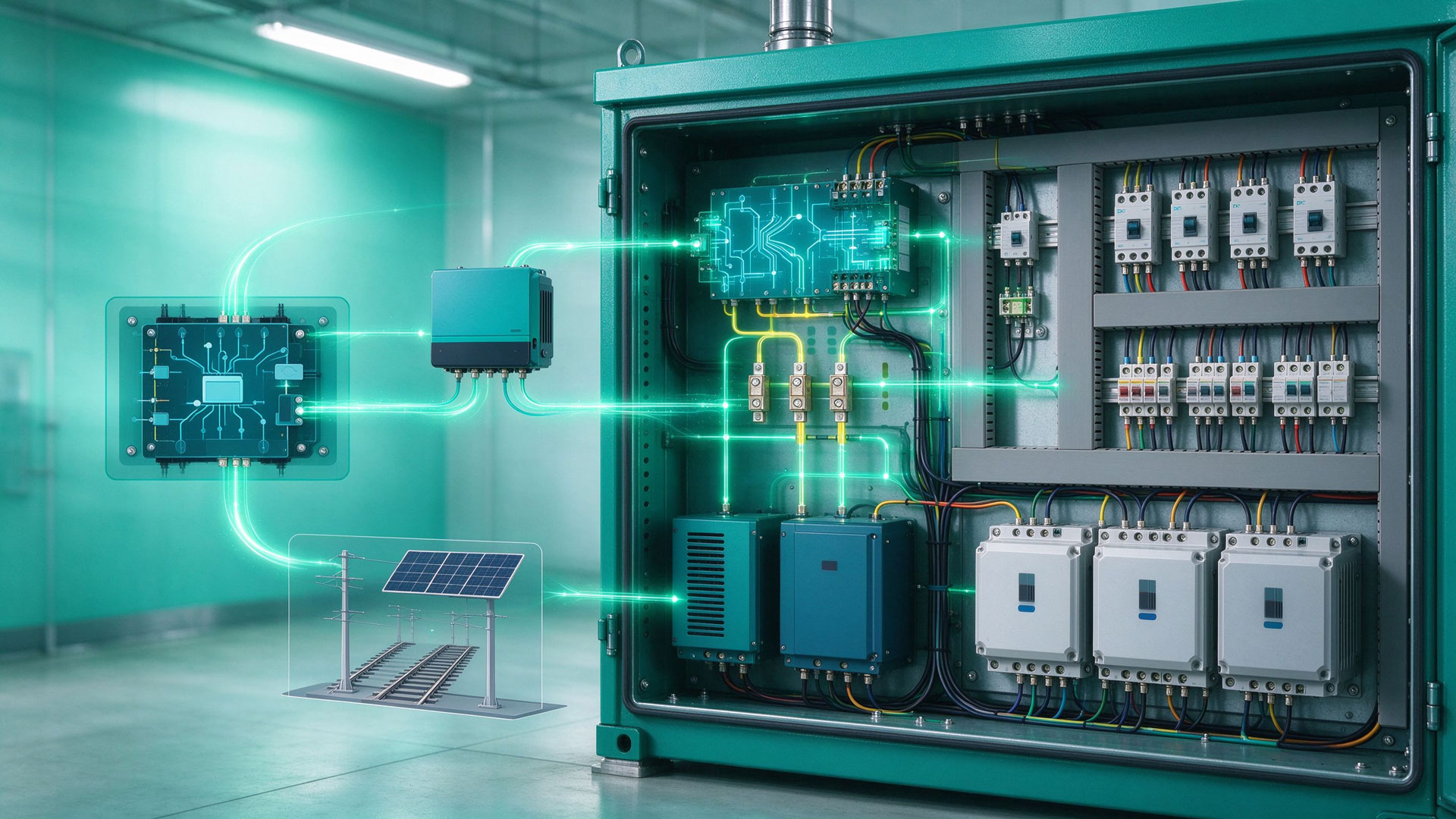
Industrial Applications of DC/DC Power Modules Keep Expanding, High-Efficiency Isolated Solutions Become Core Demand
Driven by industrial automation, renewable energy and rail transit, DC/DC power modules for power conversion see growing market demand. Industrial, energy storage and on-board equipment require more than basic voltage conversion. High isolation, wide input range, good EMC performance and long-term reliability are key selection criteria. Requirements for surge, vibration and temperature resistance vary across applications. The technology develops toward high-frequency integration and digital control. Buyers also value stable supply chains and customization. DC/DC modules are essential power components for industrial electronics and renewable energy systems.
Industrial applications of DC/DC power modules continue to expand, and high-efficiency isolated solutions have become a core requirement. As industrial automation, smart manufacturing, renewable energy, and rail transit keep growing, DC/DC modules play an increasingly important role as key components for stable power supply and electrical energy conversion. Modern industrial equipment no longer expects power systems to perform only basic voltage conversion. Instead, customers prioritize high efficiency, high isolation voltage, wide input range, low quiescent power, strong immunity to interference, and long-term reliability. This trend is pushing manufacturers to improve product performance and develop more application-specific solutions.
In industrial control, PLCs, sensors, servo systems, industrial displays, and distributed IO modules usually require stable DC power. Field environments are often harsh, with grid fluctuations, surge voltages, electromagnetic interference, and temperature variations that can disrupt equipment operation. For this reason, DC/DC modules with wide input voltage range, galvanic isolation, and good EMC performance are in high demand. Many manufacturers optimize topologies, use low-loss components, and improve thermal design to maintain high efficiency under various load conditions while reducing heat generation and easing customer thermal design.
The renewable energy sector also creates significant growth opportunities for DC/DC modules. In photovoltaic inverters, energy storage converters, battery management systems, charging piles, and storage cabinets, DC/DC modules provide auxiliary power, control circuit power, sampling circuit power, and communication module power. These applications often require modules to accommodate wide battery voltage fluctuations and offer high isolation voltage for electrical safety between high-voltage and low-voltage sides. As system voltage levels rise, insulation design, creepage distance optimization, and safety certification have become essential competitive factors.
Rail transit and power utility applications impose even higher reliability requirements. Vehicle and grid environments involve voltage transients, surges, vibration, humidity, and wide operating temperatures, which can cause premature failure or shorter service life for ordinary power modules. As a result, DC/DC modules that meet railway specifications, power industry standards, and high MTBF metrics are more likely to enter these high-end markets. Some manufacturers improve environmental robustness through component derating, thermal optimization, conformal coating, and rigorous reliability testing.
From a technological perspective, high-frequency operation, integration, and digitalization are driving DC/DC module upgrades. High-frequency switching helps reduce transformer and filter component size, making modules more compact. Integrated protection, gate drive, and control functions simplify customer peripheral design, while digital control improves output regulation, fault diagnosis, and dynamic response. However, high-frequency operation also introduces challenges in EMC, switching losses, and noise control, making coordinated optimization of materials, packaging, and control algorithms increasingly important.
Today, customers focus not only on price but also on supply chain stability, lead times, local technical support, and customization capability. Going forward, DC/DC power modules will continue to develop toward higher efficiency, higher power density, stronger isolation, smarter control, and greener low-carbon operation, becoming an indispensable part of industrial electronics and renewable energy systems.