
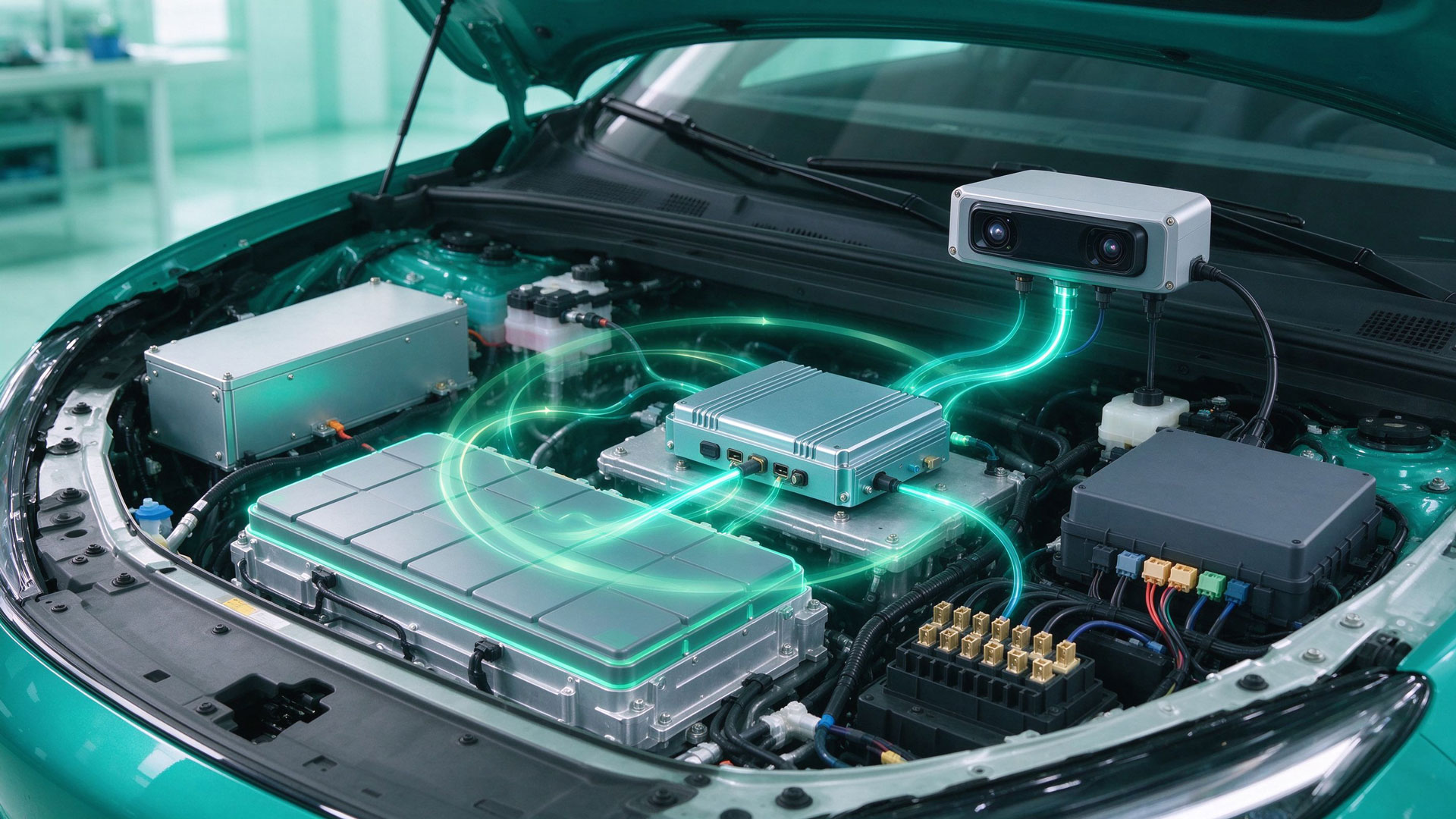
Automotive DC/DC Power Modules Support EV and Intelligent Driving Electrical System Upgrades
The growth of electric vehicles and intelligent driving has increased the number of automotive electronic and electrical devices, raising demand for stable, efficient and compact low-voltage power supplies. Automotive DC/DC modules convert high-voltage battery power into regulated DC voltage for on-board electronics and supply auxiliary systems, sensors and domain controllers. They emphasize high integration, reliability, vibration resistance, wide-temperature operation and EMC performance, making them key power components for EVs, intelligent driving domains and automotive electrical systems.
The rapid development of electric vehicles and intelligent driving has made automotive electronic and electrical systems much more complex. Traditional fuel vehicles had relatively limited electronics, but electric vehicles now integrate battery management systems, motor control and vehicle controllers, plus intelligent driving sensors, domain controllers, communication modules, display units and safety-related electronics. All these devices require stable, clean low-voltage DC power, making automotive DC/DC modules critical components in the vehicle electrical architecture.
The main task of an automotive DC/DC module is to convert the high-voltage DC voltage from the traction battery into the lower DC voltage required by on-board electronics. In electric vehicles, the battery voltage level is relatively high, while controllers, sensors, actuators and communication modules normally operate at lower voltages, requiring voltage conversion and electrical isolation through the power module. The module also supplies always-on systems, wake-up circuits, safety monitoring loops and auxiliary electronics to ensure stable vehicle operation under different conditions.
Because the automotive environment is harsh, power modules must meet higher reliability requirements than many industrial applications. Vehicles are subject to continuous vibration, mechanical shock, wide temperature changes, humidity, dust and electromagnetic interference, so modules need robust anti-vibration structures, good thermal design, wide-temperature capability and strong EMC performance. Intelligent driving sensors and domain controllers are especially sensitive to supply noise, voltage stability and transient response, so power quality directly affects perception accuracy and control stability.
Requirements vary by vehicle type and electrical architecture. Battery electric vehicles need modules to work with the traction battery and vehicle controller to meet high-voltage safety and energy management requirements. Plug-in hybrid vehicles add engine, generator and battery coordination, so the power system must handle more complex operating mode transitions. Intelligent driving vehicles place higher demands on sensor power, domain controller power and functional safety-related supply. As features grow, automotive DC/DC modules are evolving from single power units into integrated, intelligent power nodes.
From a system design perspective, an automotive DC/DC module is not a standalone component. It must be co-designed with the vehicle electrical architecture, BMS, VCU, sensor network and communication network. Wiring distribution, grounding strategy, protection logic, fault diagnosis and safety levels must be considered at the vehicle level. Especially for high-voltage safety, modules need comprehensive insulation monitoring, fault isolation and safe shutdown capability to reduce electrical risk.
Going forward, as electric vehicles move toward higher-voltage platforms, high-computing domain controllers and intelligent driving, automotive DC/DC modules will continue developing toward higher integration, higher power density, digital diagnosis and functional safety. They will remain essential not only as voltage converters, but as a key foundation for stable operation and intelligent upgrading of the full vehicle electrical system.