
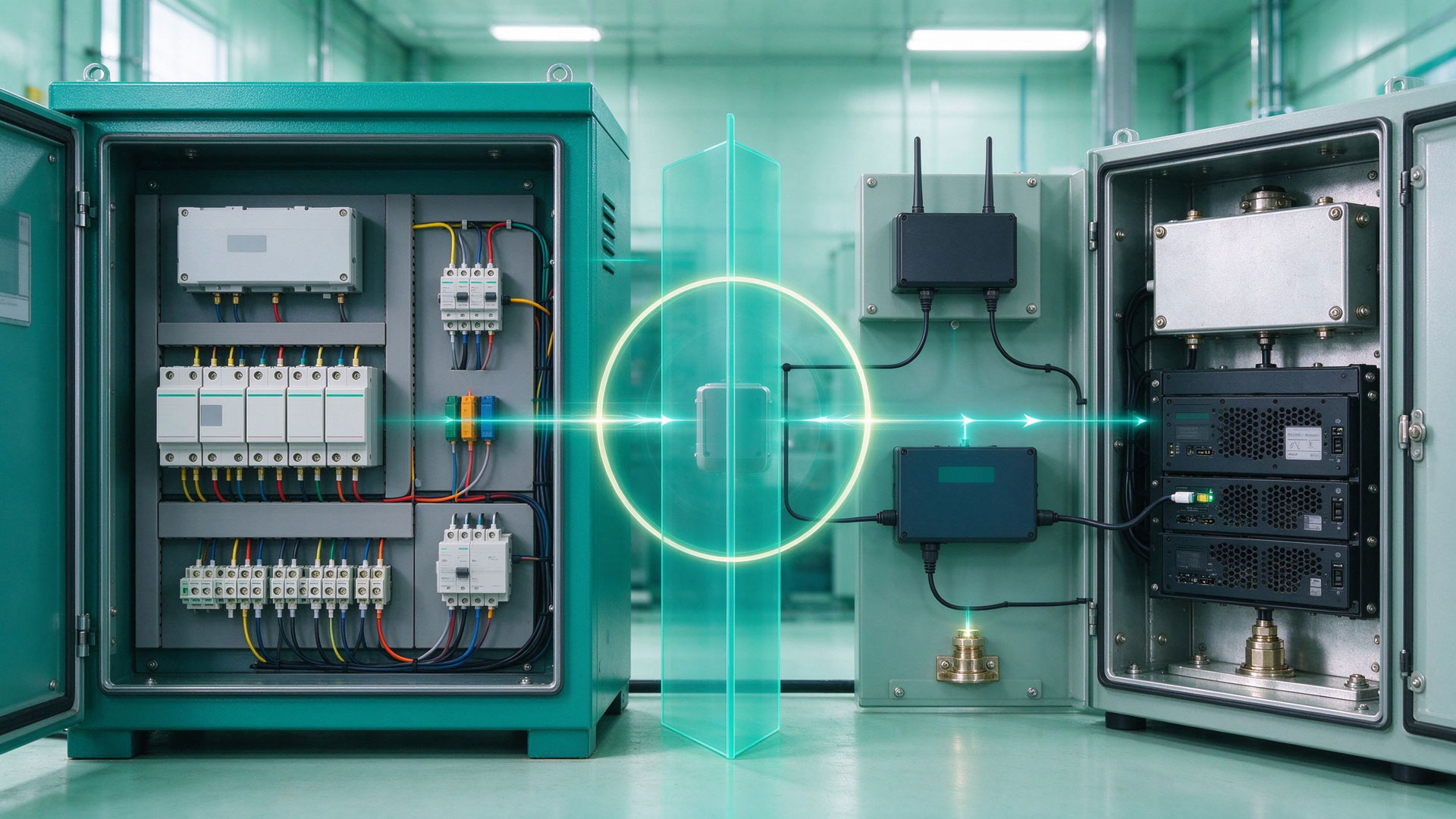
Isolated DC/DC Power Modules Improve Industrial System Safety and Immunity
In industrial settings, grid fluctuations, surges, electrostatic discharge and ground loop interference often disrupt sensors, controllers and communication equipment. Isolated DC/DC modules break conductive interference paths through galvanic isolation while delivering stable DC output. They emphasize isolation voltage, creepage distance, clearance, EMC and surge protection, making them suitable for harsh electromagnetic environments. In industrial automation, instrumentation, medical electronics, power monitoring and renewable energy, isolated modules reduce failure risk and improve system safety and long-term stability.
Industrial sites frequently operate in complex electromagnetic environments. Grid fluctuations, surge transients, electrostatic discharge, radio-frequency interference and ground loop potential differences can disturb sensors, controllers, display units and communication interfaces. Many equipment failures do not originate from the main processor but from interference entering through the power or interface side. Isolated DC/DC modules create galvanic isolation between input and output, blocking conductive interference paths while supplying stable, clean DC power to downstream circuits.
One core specification is isolation voltage. Requirements vary by application, but industrial control and measurement devices often need high isolation to withstand grid variations and transient overvoltage. Creepage distance and clearance must also meet safety standards to preserve insulation reliability under long-term operation, pollution and humidity. Some high-isolation modules use reinforced insulation structures, combined with insulating materials, isolation transformer design and strict process control to reduce insulation failure risk.
Immunity is equally important. Common-mode interference, differential-mode noise and high-frequency disturbances can couple into sensitive circuits through power lines. Isolated modules, together with input filtering, output filtering, shielded grounding and proper PCB layout, effectively suppress conducted interference. In sensor and data acquisition systems, isolated power supplies reduce measurement errors. In communication interfaces and control buses, they lower bit error rates and communication faults. In medical electronics and power monitoring equipment, they strengthen personal and equipment protection.
Selection priorities differ by application. Industrial PLCs and distributed IO modules need isolated power to cooperate with digital interfaces and reduce field interference to control logic. Instrumentation and data acquisition systems require low-noise, highly stable isolated supplies for sampling accuracy. Medical electronics demand high isolation, low leakage current and compliance with medical safety standards. Power monitoring equipment must tolerate high-voltage environments and strong electromagnetic interference.
From a system design perspective, installing an isolated module is not enough by itself. Engineers must coordinate front-end protection, filtering networks, grounding strategy, shield connections and PCB partitioning. Poor grounding can weaken isolation performance, while insufficient front-end protection may allow surges to damage the module or downstream circuits. Therefore, module selection should be designed together with the system protection scheme, not treated as a later fix.
Going forward, isolated DC/DC modules will develop toward higher isolation voltage, lower noise, higher integration and stronger EMC performance. As industrial equipment becomes smarter and more networked, safety and immunity requirements will rise, making isolated power supplies increasingly a basic requirement rather than an optional add-on in complex industrial systems.