
IoT & Smart Sensing
DC/DC module offers high efficiency and low quiescent current for battery-powered IoT sensors, extending battery life with stable output.
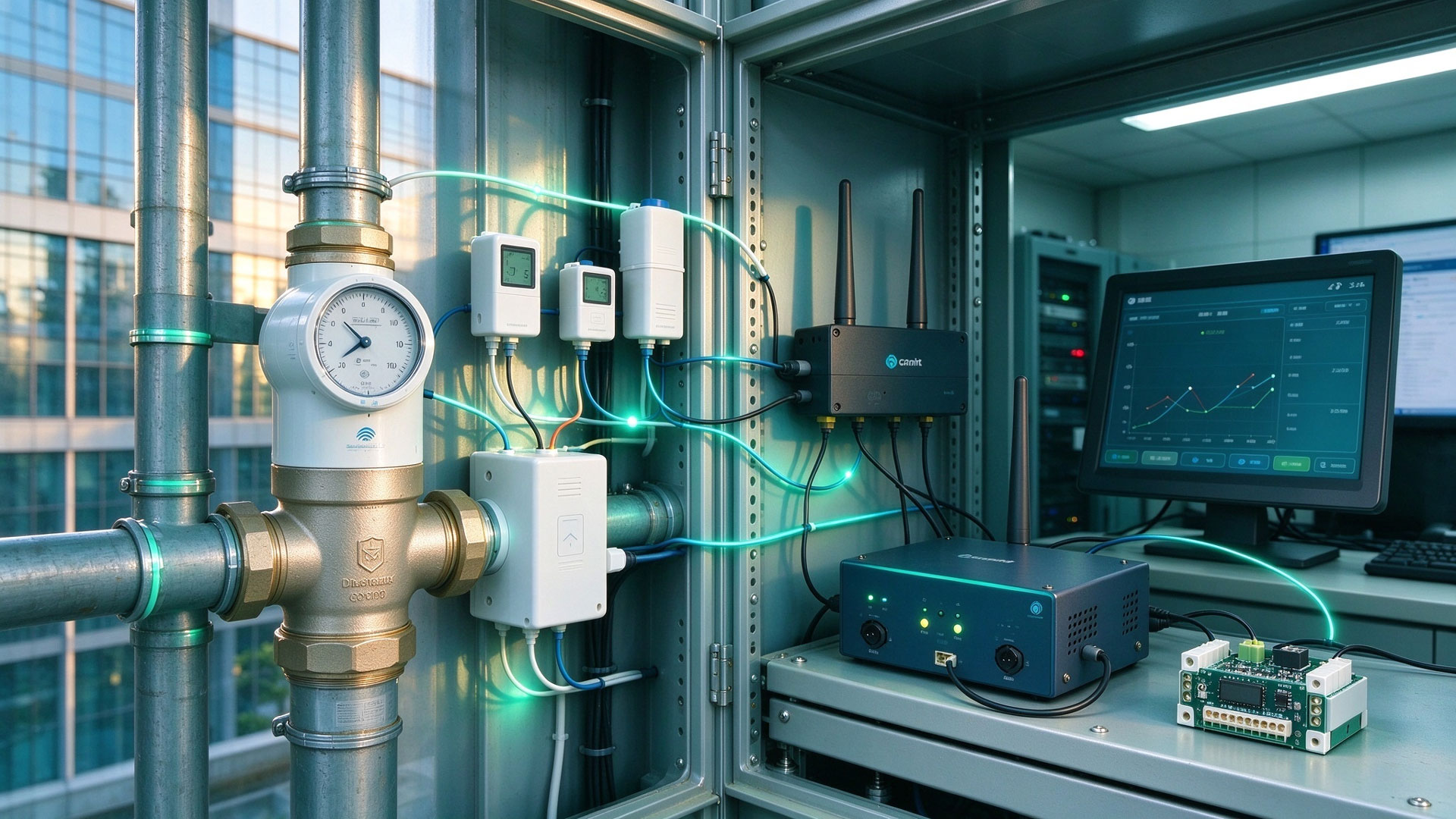
The Internet of Things has created a huge demand for compact, low-power, and energy-efficient power solutions that can support battery-operated devices, wireless sensor nodes, smart meters, environmental monitors, and edge sensing equipment. Many IoT devices are deployed in remote locations, underground, inside buildings, or in difficult-to-access areas, where regular battery replacement is costly and inconvenient. As a result, power management must be highly efficient, especially at light load and standby levels, to extend battery life and reduce maintenance frequency. Our DC/DC power modules are designed to meet these requirements by offering low quiescent current, high conversion efficiency, compact form factors, and stable output voltages for microcontrollers, wireless communication chips, sensors, and display interfaces. They can be used in a wide range of IoT applications, including smart electricity meters, gas meters, water meters, environmental sensors, air quality monitors, temperature and humidity sensors, vibration sensors, smart lighting controls, building automation nodes, and battery-powered edge sensors. In these systems, the DC/DC module typically converts the battery voltage or irregular DC input into a stable voltage required by the system-on-chip, radio module, and sensor circuitry. A high-efficiency power module reduces energy loss, lowers heat generation, and allows the device to operate for longer periods on a single battery charge. Isolated modules also provide protection against voltage transients, electrostatic discharge, and ground loop noise, which is particularly important when sensors are connected over long cables or distributed across different locations. In addition, many IoT terminals require compact size to fit into space-constrained enclosures, so our low-profile modules help designers achieve smaller and more integrated products. For system developers, the key advantages include simplified power architecture, reduced BOM complexity, improved reliability, and faster product development. By choosing the right DC/DC solution, IoT device manufacturers can build smarter, more energy-efficient, and longer-lasting sensing products that support large-scale deployment in industrial, commercial, and residential environments.